Actuator failed
The actuator no longer moves, runs roughly or fails intermittently. Often only one assembly is affected, not the whole drive.
 Linear Technology
 Knowledge · Retrofit
An old, defective or discontinued electric linear actuator rarely means the end of the system. This page shows how to proceed – from the starting situation through the helpful information to the paths of repair, spare part, functionally equivalent replacement or improved new solution. You do not need to know all the data for this: a photo and the type plate are enough to get started.
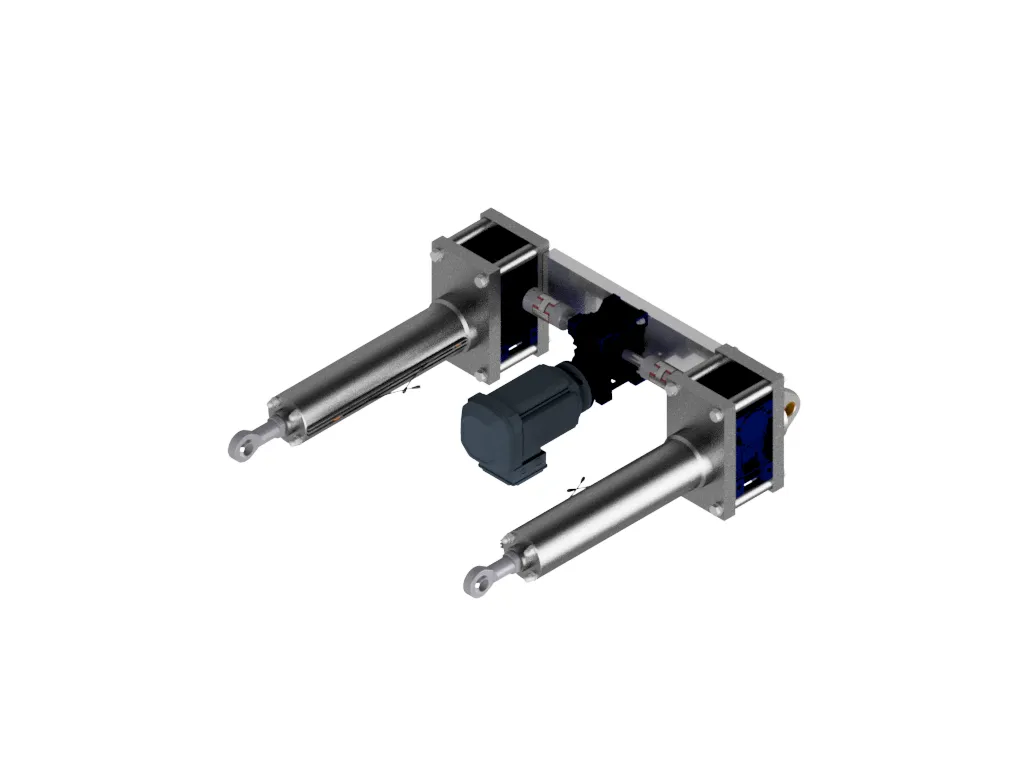
Even when the original drive has failed, the manufacturer no longer exists or spare parts are discontinued: there is almost always a viable path to preserve the motion. You do not have to analyse the system yourself or know all the data – a photo and the type plate are enough to get started. S+R draws up an assessment and compares repair, spare part, functionally equivalent replacement and technically improved new solution to recommend the economically and technically suitable path.
Starting situation
Most retrofit cases begin with one of these situations. In all of them the motion can be preserved – the only question is by which path.
The actuator no longer moves, runs roughly or fails intermittently. Often only one assembly is affected, not the whole drive.
The original supplier no longer exists or no longer offers the series. The motion is still needed in the system regardless.
Only type and serial number are known. From the type plate, a photo and the installation situation, the assembly can usually be reconstructed.
A long standstill is not an option. What is needed is a solution with calculable risk and a dependable delivery date.
Screw, motor, encoder or control are discontinued. Then it comes down to whether repair, rebuild or retrofit is the faster and safer path.
A hydraulic or pneumatic cylinder is to be replaced media-free – within the existing installation space and connected to the existing control system.
Electric instead of hydraulic or pneumatic? The comparison with clear suitability limits →
Inquiry
The more of it is available, the faster the evaluation. But no one has to answer the whole list: a photo and the type plate are already enough, S+R clarifies the rest in the callback.
An image of the installed actuator often shows design, mounting and condition better than any description. Even a phone photo is enough.
Type, serial number and manufacturer are the quickest starting point – even when nothing else is available.
Rough lengths, mounting distances and connection position. A sketch or a photo with a tape measure is enough to begin with.
The travel from retracted to extended – an approximate figure is enough.
What does the actuator move? Load weight or order of magnitude rather than an exact kN figure.
How is it actuated: limit switches, potentiometer, encoder, 0–10 V / 4–20 mA, PLC? Even "I am not entirely sure" is a useful answer.
How are the end positions detected and held – mechanically, via switches or via the control system?
Indoors or outdoors, moisture, dust, temperature, chemicals. From this follow protection class and material.
What the machine is meant to do often helps more than any single figure – the rest can be derived from it.
Decision
Which path fits follows from the assessment. Often it is a combination – for instance a spare part today, a documented replacement strategy for tomorrow.
When the assembly can be economically overhauled: replace wear parts, test and reinstall. The fastest path when the assessment supports it.
When only one component is defective and can be identified: replace screw, nut, bearings, motor, limit switch, encoder or control specifically.
When repair is no longer worthwhile: a mechanically and electrically matching actuator that fits the existing installation space and interface.
When it is being replaced anyway: the same installation situation, but a better screw, sensors, protection class or control connection.
When the system exists multiple times: a repeatable, documented replacement assembly instead of many one-off solutions.
Assessment
The recommendation emerges from these points. You do not have to answer them yourself – this is exactly the part that S+R takes on.
Wear on screw, nut, guide and bearings – is an overhaul technically viable?
Motor, brake, limit switches and encoder: still identifiable, replaceable or worth modernising?
Mounting, installation space, connection and stroke – does the replacement fit without modifying the machine?
Are the required parts available or discontinued? Is the effort worthwhile compared with a replacement?
Repair, retrofit and new part compared – including risk and a realistic delivery date.
What stays traceable: drawing, calculation and interface for the next service case.
In practice
From the lock system after 20 years to the harsh production environment – the starting situation decides the path.
A heavy-duty actuator comes back after roughly 20 years – assessment, spare-part assignment and service-life extension instead of a complete rebuild.
View reference →An old drive is no longer economical to repair. A mechanically compatible retrofit replaces it without modifying the machine.
View reference →An older positioning axis is to remain reproducible and data-capable – a replacement with a defined, documented interface.
View reference →Heat, dust and high forces challenge the assembly – a robust custom or replacement actuator for continuous operation.
View reference →FAQ
For a start, yes. From the type, serial number, a photo and the installation situation, the assembly can usually be reconstructed. S+R clarifies the missing details in the callback – you do not need to know everything in advance.
Yes. S+R assesses the old unit as an assembly in its own right, checks the condition and interface, and develops a matching replacement – independently of the original supplier.
The assessment decides: wear, parts availability, cost-effectiveness and delivery date. S+R compares repair, spare part, retrofit and new part and recommends the most viable path.
Usually not. The aim is a mechanically and electrically matching replacement that adopts the existing installation dimensions, mounting and control – a modification is the exception, not the standard.
S+R records the data, draws up an assessment and compares the paths. You receive an evaluation with next steps, risk and delivery date – and then decide at your own pace.
An image of the installed actuator and the type plate are enough to get started. S+R draws up the assessment, compares the paths and gets back to you with an evaluation including next steps and delivery date.